



Do Weight Loss Supplements Actually Work? I Read the Research So You Do Not Have To

By Priya Raghavan · Updated 4 August 2026 · Based on the printed label and published research
For most products on the shelf, no. A systematic review covering more than 300 randomised controlled trials found little to no high quality evidence that over the counter weight loss supplements produce meaningful weight loss. A few ingredients showed effects that were statistically real but too small to matter in daily life. The honest summary is that supplements can be a minor supporting tool at best, and the habit changes they are sold to replace remain the thing that actually moves weight.

Every advertisement for a fat burner is built on one assumption: that you will never look up the research. This article is me looking it up for you. I spent fourteen years reading studies for a living as a market research analyst, and the weight loss supplement literature is the least flattering body of evidence I have ever summarised.
That is worth saying plainly at the top, because I run a site that analyses a weight loss supplement. If that sounds like a contradiction, stay for the last section, where I explain why I do it anyway.
The biggest study of the studies
In 2021, researchers published a systematic review in the journal Obesity that did something rare: instead of testing one product, they gathered the randomised controlled trials for every major supplement category, more than 300 trials in total, and asked a simple question. Where is the high quality evidence of meaningful weight loss?
They did not find much.
| What the review found | What it means for you |
|---|---|
| Little to no high quality evidence across categories | Most products have never properly proven their central claim |
| A few ingredients showed statistically significant loss | The effect was real in the data |
| Those losses were too small to be clinically meaningful | Real in the data, invisible in your life |
| Most trials were small, short and poorly designed | Even the favourable results are shaky |
The phrase worth memorising is statistically significant but not clinically meaningful. It describes an effect large enough for mathematics to detect and too small for you to notice. A difference of half a kilogram after months of daily capsules is a statistical fact and a practical nothing.
Why the evidence is this weak
This is not bad luck. The weakness is built into how the industry works, and understanding that will protect you better than any single product review.
Supplements are not tested like medicines. In India and almost everywhere else, a supplement does not need to prove it works before it goes on sale. It needs to be safe to consume and honestly labelled, in theory. Efficacy, the part the advertisement is about, is never checked by anyone before the product reaches you. The FSSAI regulates supplements as food, not as treatment, which is why the fine print on every honest label says the product does not treat or cure any disease.
The trials that do exist are mostly small and short. Twenty people for eight weeks is a common shape. Studies like that produce noisy results in both directions, and the flattering ones get quoted in marketing while the unflattering ones are forgotten.
Much of the research is funded by the people selling the ingredient. That does not automatically make it false, but it reliably shapes which questions get asked and which results get published. The green coffee story is the famous cautionary tale: a heavily promoted trial was later retracted outright, years after it had powered a thousand advertisements.
The short list of things with a real signal
To be fair to the category, the review did find ingredients with measurable effects. Glucomannan, a fibre that swells in the stomach. Chitosan. Conjugated linoleic acid. Each produced weight loss that beat placebo in pooled data.
The catch is the size. These effects are measured in fractions of a kilogram over months, which is why the reviewers used that phrase about clinical meaning. And notice what the winners have in common: the most defensible ingredient in the whole literature is essentially fibre, the thing your dal and vegetables already contain, sold back to you in a capsule at forty times the price.
Stimulants deserve their own line. Caffeine and its relatives genuinely suppress appetite in the short term, which is why so many fat burners are stimulant formulas underneath the botanical names. That effect is real, and it comes with cardiovascular questions that deserve more respect than the category gives them. I wrote about a product that takes the stimulant approach to an extreme in my Optiloss side effects analysis, where the dose on the label is four times higher than anything the safety research has tested.

So what actually moved my weight
I owe you my own data, since I keep asking products for theirs. I put on 12 kg after my second child. Over roughly four years I tried jeera water, a sauna belt, three tracking apps and two imported supplements, and none of it moved the scale in a way I could separate from wishful thinking.
What worked was slower and cheaper: walking most days, cooking at home so I controlled the oil and the portions, and eating protein first so I was not hungry at 11 pm. It took about a year. Nothing about that year was secret knowledge. It was just the part the capsule advertisements promise you can skip, and you cannot.
That is the fair summary of the entire evidence base in one sentence: supplements have not earned the right to replace the boring things, and the boring things work.
Why this site covers supplements anyway
If the evidence is this thin, why does a site like mine analyse a supplement in detail, ingredient by ingredient?
Because the research also tells me something else: people buy these products anyway, by the crore, evidence or no evidence. The advertisement reaches more people than the systematic review ever will. And when someone has already decided to try a product, the useful question stops being "should anyone ever buy this" and becomes "what exactly is in it, at what dose, and who should stay away from it".
That second question has real answers, and almost nobody selling supplements provides them. So I do. My full review of Optiloss exists for the reader who has already seen the ad and is going to make a decision tonight, with or without me. I would rather that decision happen with the label read and the contraindications known.
If you take one thing from this article, though, let it be the order of operations: habits first, and capsules, if ever, as a footnote you have discussed with a doctor.
I am a market researcher, not a doctor, and nothing here is medical advice. I do not diagnose, treat or prescribe. No supplement is a treatment for obesity, diabetes, PCOS or a thyroid condition, and stimulant based products carry real risks for people with blood pressure or heart conditions and for anyone pregnant or breastfeeding. Speak to a qualified doctor before taking anything, and prioritise the diet and activity changes the evidence actually supports.
 Sponsored link
IF YOU ARE STILL CONSIDERING ONE
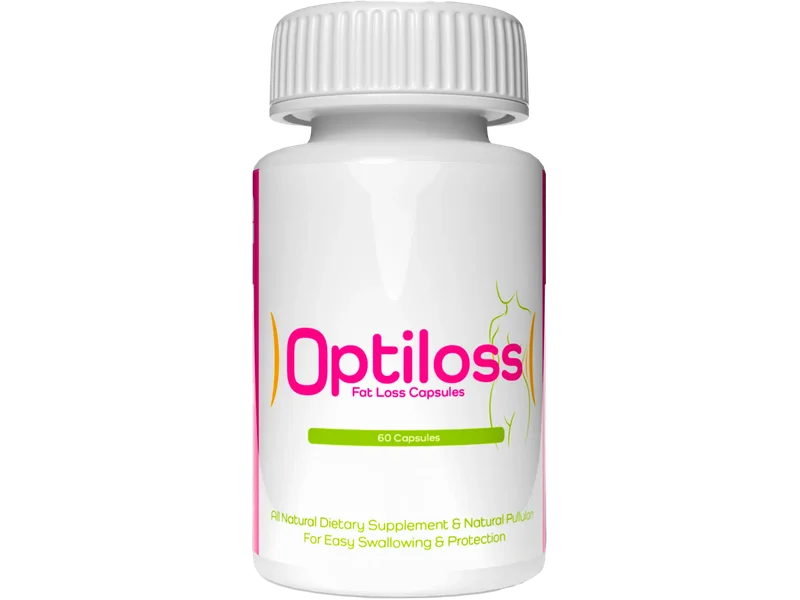
The one product this site has taken apart, label by label
A long video presentation from the seller. Our review and side effects analysis cover what the label actually says.
Visit the official page →
Sponsored link
IF YOU ARE STILL CONSIDERING ONE
The one product this site has taken apart, label by label
A long video presentation from the seller. Our review and side effects analysis cover what the label actually says.
Visit the official page →
Affiliate disclosure: we earn a commission if you buy through this link, at no extra cost to you. It does not change what we publish.
Frequently asked questions
Is there any weight loss supplement that actually works?
A few ingredients, such as glucomannan and some fibres, show effects that beat placebo in pooled trial data. The losses are fractions of a kilogram over months, which researchers describe as statistically significant but not clinically meaningful. Nothing in the over the counter category has evidence resembling what diet and activity changes produce.
Why do weight loss supplements have so little evidence behind them?
Because they are not required to have any. Supplements are regulated as food, not medicine, so efficacy is never tested before sale. The trials that exist tend to be small, short and often industry funded, which produces flattering noise rather than reliable answers.
Do fat burners work for belly fat?
No supplement directs fat loss to one part of the body. Stimulant based fat burners can suppress appetite short term, which may reduce overall intake, but spot reduction of belly fat through a capsule has no supporting evidence. Where your body loses fat first is decided by genetics, not by the product.
Are weight loss supplements safe to try even if they do not work well?
Not automatically. Natural does not mean safe, and stimulant formulas in particular raise heart rate and blood pressure questions. Anyone with a heart condition, high blood pressure or a thyroid disorder, and anyone pregnant or breastfeeding, should not take them without a doctor's clearance. The safety question matters more than the efficacy one, precisely because efficacy is so small.
What should I do instead of buying a supplement?
The unglamorous list the evidence supports: a modest calorie deficit through home cooked food, more protein and fibre, daily walking or equivalent activity, and enough sleep, because short sleep reliably increases hunger. It is slower than any advertisement and it is the only approach with strong evidence behind it.
Keep reading
 Appetite Control Supplements: What Actually Quietens Hunger, and What Just Sells
Appetite suppressants promise to switch hunger off. What actually reduces appetite according to research, what...
Read the analysis →
Appetite Control Supplements: What Actually Quietens Hunger, and What Just Sells
Appetite suppressants promise to switch hunger off. What actually reduces appetite according to research, what...
Read the analysis →
 Banned Weight Loss Ingredients, and Why They Keep Turning Up Anyway
Sibutramine was banned in India in 2010 and is still the most common adulterant found in slimming capsules. Th...
Read the analysis →
Banned Weight Loss Ingredients, and Why They Keep Turning Up Anyway
Sibutramine was banned in India in 2010 and is still the most common adulterant found in slimming capsules. Th...
Read the analysis →
 The Best Weight Loss Supplement in India: Why That Question Is a Trap
Every list of the best weight loss supplements in India is written by a shop. Here is how to read a label, spo...
Read the analysis →
The Best Weight Loss Supplement in India: Why That Question Is a Trap
Every list of the best weight loss supplements in India is written by a shop. Here is how to read a label, spo...
Read the analysis →
 Fat Burner Side Effects: What Is Normal, What Is a Warning Sign
Most fat burner side effects come from one thing: stimulants. What is normal, what is a warning sign, who shou...
Read the analysis →
Fat Burner Side Effects: What Is Normal, What Is a Warning Sign
Most fat burner side effects come from one thing: stimulants. What is normal, what is a warning sign, who shou...
Read the analysis →
 How to Take Optiloss Capsules: The Dose, and What It Delivers
The seller instructs two Optiloss capsules a day with meals. The printed label declares 400 mg of synephrine i...
Read the analysis →
How to Take Optiloss Capsules: The Dose, and What It Delivers
The seller instructs two Optiloss capsules a day with meals. The printed label declares 400 mg of synephrine i...
Read the analysis →
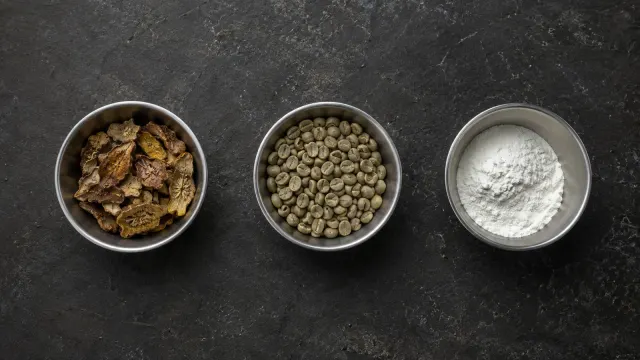 L-Carnitine, Garcinia and Green Coffee: What the Research Says About the Big Three
The three ingredients in almost every Indian fat burner, checked against published research. What each one doe...
Read the analysis →
L-Carnitine, Garcinia and Green Coffee: What the Research Says About the Big Three
The three ingredients in almost every Indian fat burner, checked against published research. What each one doe...
Read the analysis →
 How to Read a Supplement Label Before You Believe the Front of the Box
Per serving or per capsule? What a proprietary blend hides? Is an FSSAI licence an approval? A market research...
Read the analysis →
How to Read a Supplement Label Before You Believe the Front of the Box
Per serving or per capsule? What a proprietary blend hides? Is an FSSAI licence an approval? A market research...
Read the analysis →
 Is Synephrine Safe? The Stimulant Behind Most Fat Burners, Examined
Synephrine is the stimulant behind most fat burners. Safety research stops at 98 mg a day, and FDA testing fou...
Read the analysis →
Is Synephrine Safe? The Stimulant Behind Most Fat Burners, Examined
Synephrine is the stimulant behind most fat burners. Safety research stops at 98 mg a day, and FDA testing fou...
Read the analysis →
 Optiloss Ingredients: Every Line of the Label, Checked Against the Research
The full Optiloss ingredient list with real amounts from the printed label, what research says about each one ...
Read the analysis →
Optiloss Ingredients: Every Line of the Label, Checked Against the Research
The full Optiloss ingredient list with real amounts from the printed label, what research says about each one ...
Read the analysis →
This site is reader supported. If you buy through a link here, I earn an affiliate commission at no extra cost to you. That includes the link below. It has not softened a word of the evidence summary above, as you may have noticed.