



How to Read a Supplement Label Before You Believe the Front of the Box

By Priya Raghavan · Updated 4 August 2026 · Based on the printed label and published research
Six things decide whether a supplement label is honest. Whether amounts are given per serving or per capsule, since those differ by the serving size and it is easy to read one as the other. Whether every ingredient has a milligram figure rather than hiding in a proprietary blend. What the total stimulant load adds up to across all sources. Whether the daily dose and the pack size mean the pack lasts as long as the price implies. Whether a real, addressable company and licence number are printed on it. And whether the front of the pack promises a number of kilograms, which is the clearest sign to put it down.

The front of a supplement box is advertising. The back is closer to a legal document. Almost everything worth knowing is on the back, in small type, and almost nobody reads it, which is precisely why the front can get away with what it says.
I spent fourteen years as a market research analyst, which mostly meant finding the gap between what a company claimed and what its own paperwork showed. This is that method, applied to a supplement pack, in the order I actually use it.
1. Per serving or per capsule? This is the trap
Start here, because getting this wrong invalidates everything else you work out.
An ingredient table can list amounts per capsule or per daily serving, and the difference is the serving size. If the serving is two capsules, a "500 mg" line means either 500 mg in each capsule or 500 mg across both, depending on which convention the label uses. That is a twofold difference in what you are taking.
Look for the column heading. Honest labels say "per daily dose", "per serving" or "per capsule" explicitly. Then find the serving size, usually printed as "directions for use" rather than in the table.
Why I am insistent about this: I have watched this exact ambiguity change the meaning of a product. A label declaring a stimulant amount "per daily dosage" tells you nothing about concentration until you know how many capsules that dose contains, and a reader who assumes per capsule can walk away thinking a product is twice as strong, or half as strong, as it is.
2. Does every ingredient have a number?
A proper ingredient table gives a milligram figure for every active ingredient. When it does not, there is usually a reason.
The euphemism to look for is proprietary blend, sometimes dressed up as "matrix", "complex" or "formula". It lists several ingredients and one total weight, so you cannot tell whether the blend is mostly the impressive ingredient or mostly the cheap filler with a pinch of the impressive one for the label.
The defence offered is trade secrecy. In practice the effect is that the product cannot be evaluated or compared, which is convenient for the seller and useless for you.
My rule: if the stimulant is inside a blend, put the product down. For a vitamin the vagueness is annoying. For a compound that raises your heart rate, an unquantifiable dose is not something to shrug at.
3. Add up the stimulants, not just the obvious one
Labels invite you to consider each ingredient separately. Your cardiovascular system does not.
Stimulants arrive under many names, and a formula can carry three or four sources while looking moderate on each line:
- Caffeine, declared plainly
- Green tea extract, which contains caffeine
- Green coffee bean extract, which contains caffeine
- Guarana, which is largely caffeine
- Synephrine, also written as bitter orange or *Citrus aurantium*
- Yohimbine, less common but harsher
Add them together, then add your own chai and coffee, because the label assumes you drink none. If the total makes you uncomfortable, that is the number that matters, not the individual lines. I go deeper into the compound most commonly hidden in plain sight in my article on synephrine.

4. Does the pack last as long as the price implies?
This is arithmetic the seller rarely does for you, and it changes the real cost.
Capsules in the pack ÷ capsules per day = days the pack lasts.
A bottle of 60 at two a day is a month. The same bottle at four a day is a fortnight, and the monthly cost doubles without the sticker price changing. When you compare two products, compare cost per day, not cost per bottle.
While you are there, check the two dates: the expiry, and whether it leaves enough time to finish the pack at the instructed dose.
5. Is there a real company behind it?
For anything bought from an advertisement, this is the line that matters most, and it is the one I check before the ingredient table when the product is unfamiliar.
The back of an honest Indian pack carries a marketer, often a manufacturer, a full postal address, an FSSAI licence number and a contact route. That chain is checkable, and it means somebody is accountable if the product harms you or never arrives.
One correction worth making, because sellers exploit it. An FSSAI licence is a business registration, not a product approval. It means a company is licensed to make or sell food products in India. It does not mean anyone assessed whether the formula works, whether the doses are sensible, or whether the stimulant content is safe. A page describing a supplement as "FSSAI approved" is inflating a registration into an endorsement that was never given.
The same applies to certificates sellers like to display. A microbiological test on one batch shows that batch was not contaminated. It is not a licence, an approval or evidence of efficacy.
6. What is the front of the box promising?
Now turn it back over and read the marketing against what you have just learned.
The claims that should end your interest immediately:
- A number of kilograms, or a timeframe. A box that names how much you will lose and by when is making a drug claim, not a supplement claim, and no over the counter product has evidence behind it.
- Treats, cures or reverses a condition. Diabetes, PCOS, thyroid disorders. A supplement that could do this would be a medicine and regulated as one.
- A promise that no diet or exercise is required. The single most reliable marker of a product that does not work.
- A claim of clinical proof with no named study you can look up.
- An absolute safety claim, whether that is total safety or a complete absence of side effects. Nothing pharmacologically active is free of side effects, and a product that genuinely produces none is usually a product that produces nothing.
An honest label says the opposite of these things, usually in the smallest type on the box: that it is a dietary supplement, not a substitute for a varied diet, and that it does not treat or cure any disease. When you find that sentence, notice how much of the front of the box it quietly contradicts.
The method in one pass
1. Per serving or per capsule? Find the serving size. 2. Does every active ingredient have a milligram figure? 3. What do the stimulants add up to, including your own tea and coffee? 4. Capsules ÷ daily dose = days. What is the real cost per day? 5. Is there a named company, address and licence number? 6. Does the front of the box promise a number of kilograms?
Two minutes, and you will know more about the product than most of the people selling it in a marketplace listing.
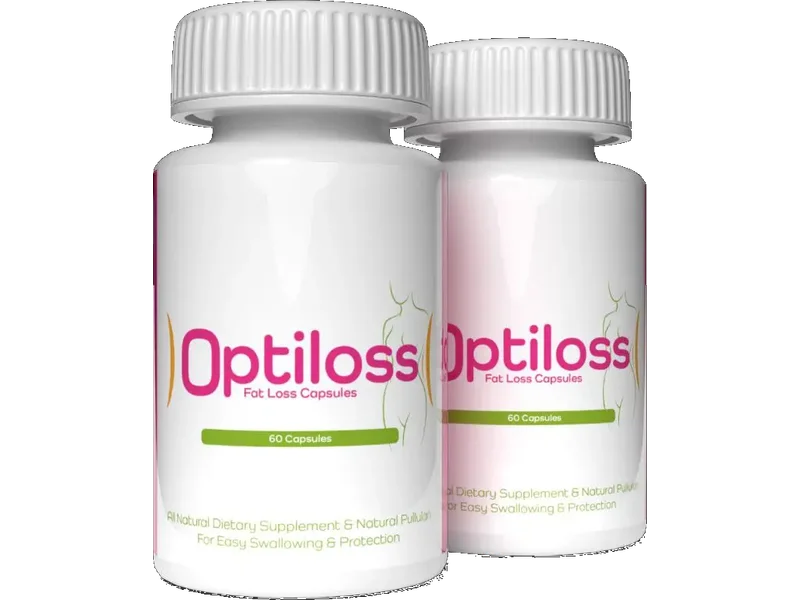
If you want to see this applied end to end rather than described, my ingredient by ingredient analysis of Optiloss is this exact process run on one real pack, including the point where the label and the seller's page did not agree.
I am a market researcher, not a doctor, and nothing here is medical advice. Reading a label carefully tells you what a product contains. It cannot tell you whether that product is safe for you specifically, which depends on your health, your medication and conditions a label knows nothing about. Speak to a qualified doctor before starting any supplement.
 Sponsored link
THE METHOD, APPLIED
See the presentation for the product we read line by line
We ran these six checks on one real pack. The ingredient analysis shows what they turned up, including where the numbers stopped adding up.
Visit the official page →
Sponsored link
THE METHOD, APPLIED
See the presentation for the product we read line by line
We ran these six checks on one real pack. The ingredient analysis shows what they turned up, including where the numbers stopped adding up.
Visit the official page →
Affiliate disclosure: we earn a commission if you buy through this link, at no extra cost to you. It does not change what we publish.
Frequently asked questions
What does per serving mean on a supplement label?
It means the amount you get from the full daily dose, which may be several capsules, rather than from one capsule. Check the serving size in the directions before doing any arithmetic, because reading a per serving figure as a per capsule figure can make you believe a product is twice as strong as it is, or half.
What is a proprietary blend and should I avoid it?
A proprietary blend lists several ingredients under one combined weight without saying how much of each is present, so you cannot tell whether it is mostly the active ingredient or mostly filler. For stimulant containing products in particular, an unquantifiable dose is a good reason to choose something else.
Does an FSSAI licence mean a supplement is approved?
No. An FSSAI licence is a business registration allowing a company to make or sell food products in India. Nobody assessed whether the formula works or whether its doses are safe. Any product advertised as "FSSAI approved" is turning a registration into an approval that does not exist.
How do I work out how long a bottle of supplements lasts?
Divide the number of capsules in the pack by the capsules per day in the directions. A bottle of 60 at two a day is about a month; at four a day it is a fortnight. Compare products on cost per day rather than cost per bottle, because the pack sizes and doses rarely match.
What claims on a supplement box are red flags?
A specific number of kilograms or a timeframe, any claim to treat or cure a condition, a promise that no diet or exercise is needed, a claim of clinical proof with no study you can look up, and any absolute safety claim. Legitimate labels carry the opposite statement in small type: that the product does not treat or cure any disease.
Is a test certificate from a laboratory the same as approval?
No. A laboratory certificate usually shows that one batch passed a specific test, often for microbiological contamination. It says nothing about whether the formula is effective or whether the doses are safe, and it is not a regulatory approval of the product.
Keep reading
 Appetite Control Supplements: What Actually Quietens Hunger, and What Just Sells
Appetite suppressants promise to switch hunger off. What actually reduces appetite according to research, what...
Read the analysis →
Appetite Control Supplements: What Actually Quietens Hunger, and What Just Sells
Appetite suppressants promise to switch hunger off. What actually reduces appetite according to research, what...
Read the analysis →
 Banned Weight Loss Ingredients, and Why They Keep Turning Up Anyway
Sibutramine was banned in India in 2010 and is still the most common adulterant found in slimming capsules. Th...
Read the analysis →
Banned Weight Loss Ingredients, and Why They Keep Turning Up Anyway
Sibutramine was banned in India in 2010 and is still the most common adulterant found in slimming capsules. Th...
Read the analysis →
 The Best Weight Loss Supplement in India: Why That Question Is a Trap
Every list of the best weight loss supplements in India is written by a shop. Here is how to read a label, spo...
Read the analysis →
The Best Weight Loss Supplement in India: Why That Question Is a Trap
Every list of the best weight loss supplements in India is written by a shop. Here is how to read a label, spo...
Read the analysis →
 Do Weight Loss Supplements Actually Work? I Read the Research So You Do Not Have To
A systematic review covering more than 300 clinical trials found little to no evidence that weight loss supple...
Read the analysis →
Do Weight Loss Supplements Actually Work? I Read the Research So You Do Not Have To
A systematic review covering more than 300 clinical trials found little to no evidence that weight loss supple...
Read the analysis →
 Fat Burner Side Effects: What Is Normal, What Is a Warning Sign
Most fat burner side effects come from one thing: stimulants. What is normal, what is a warning sign, who shou...
Read the analysis →
Fat Burner Side Effects: What Is Normal, What Is a Warning Sign
Most fat burner side effects come from one thing: stimulants. What is normal, what is a warning sign, who shou...
Read the analysis →
 How to Take Optiloss Capsules: The Dose, and What It Delivers
The seller instructs two Optiloss capsules a day with meals. The printed label declares 400 mg of synephrine i...
Read the analysis →
How to Take Optiloss Capsules: The Dose, and What It Delivers
The seller instructs two Optiloss capsules a day with meals. The printed label declares 400 mg of synephrine i...
Read the analysis →
 L-Carnitine, Garcinia and Green Coffee: What the Research Says About the Big Three
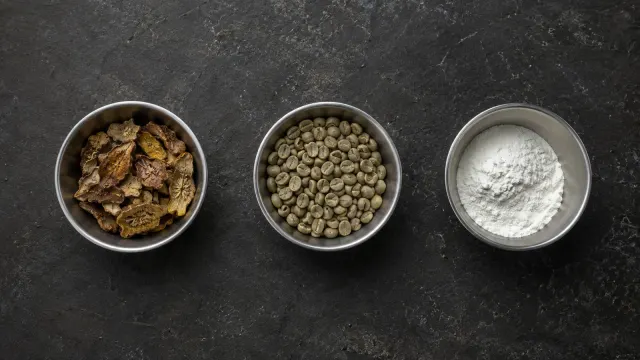
The three ingredients in almost every Indian fat burner, checked against published research. What each one doe...
Read the analysis →
L-Carnitine, Garcinia and Green Coffee: What the Research Says About the Big Three
The three ingredients in almost every Indian fat burner, checked against published research. What each one doe...
Read the analysis →
 Is Synephrine Safe? The Stimulant Behind Most Fat Burners, Examined
Synephrine is the stimulant behind most fat burners. Safety research stops at 98 mg a day, and FDA testing fou...
Read the analysis →
Is Synephrine Safe? The Stimulant Behind Most Fat Burners, Examined
Synephrine is the stimulant behind most fat burners. Safety research stops at 98 mg a day, and FDA testing fou...
Read the analysis →
 Optiloss on Amazon India: What to Verify Before You Trust Any Listing
Optiloss listings appear on Amazon India and third party shops. What to verify on any box before you trust it,...
Read the analysis →
Optiloss on Amazon India: What to Verify Before You Trust Any Listing
Optiloss listings appear on Amazon India and third party shops. What to verify on any box before you trust it,...
Read the analysis →
This site is reader supported. If you buy through a link here, I earn an affiliate commission at no extra cost to you. That includes the link below.