



L-Carnitine, Garcinia and Green Coffee: What the Research Says About the Big Three

By Priya Raghavan · Updated 4 August 2026 · Based on the printed label and published research
These three ingredients appear in most Indian fat burners and none of them produces meaningful weight loss on its own. L-carnitine shows a small real effect of around a kilogram over months in pooled trials. Garcinia cambogia has the largest gap between fame and evidence, with better designed studies repeatedly finding no difference from placebo. Green coffee bean extract rests on small trials, several industry funded, one of which was retracted outright. All three are safe enough at typical doses; the problem is that they mostly do not work.
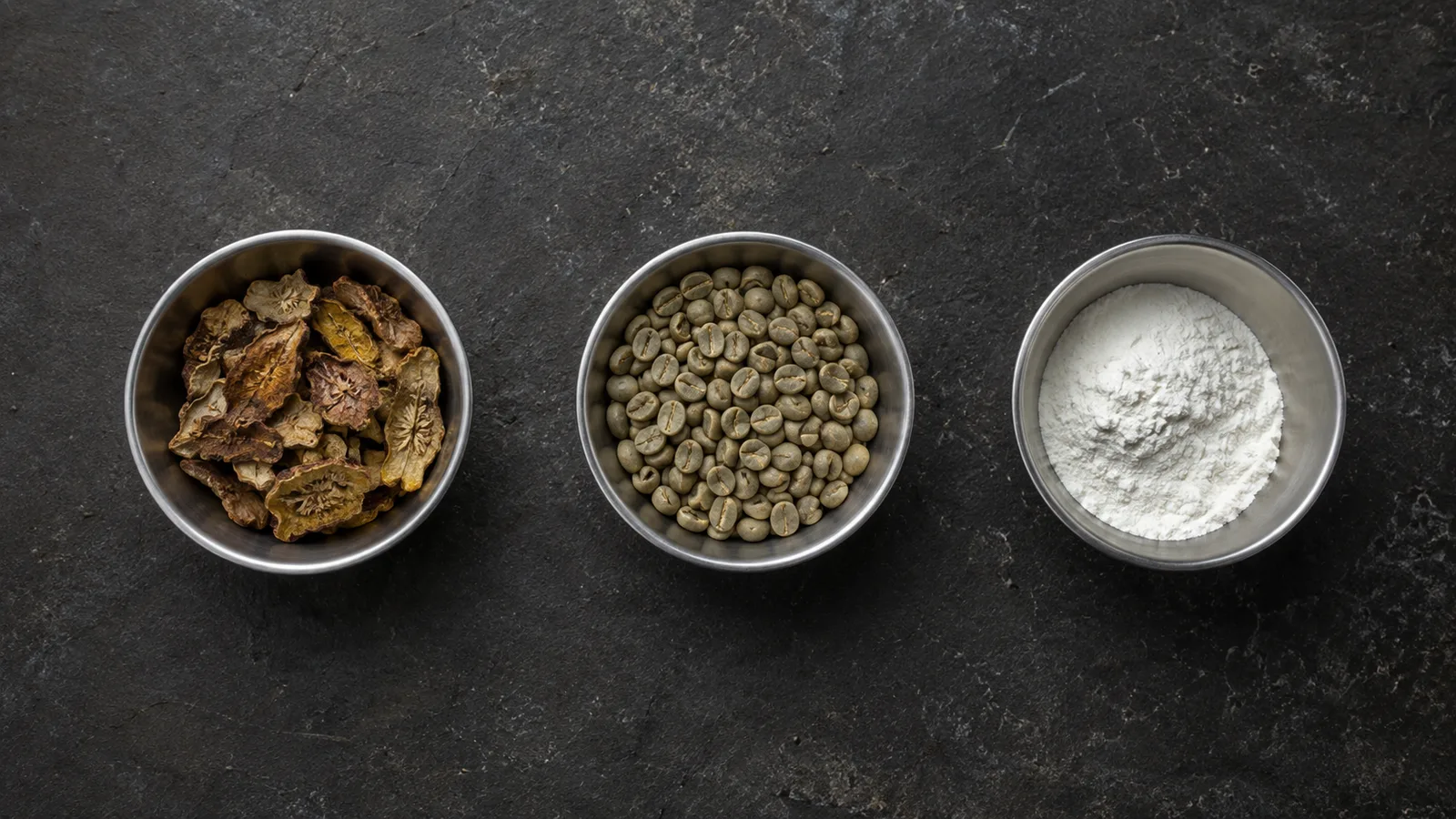
Pick up almost any fat burner sold in India and you will find at least two of these three on the label. They are the backbone of the category, which makes them worth understanding once, properly, rather than product by product.
I read these literatures the way I used to read client research: looking for what the good studies say when you set the flattering ones aside. Here is what survives that filter.
The summary table
| Ingredient | How it is marketed | What pooled research shows | My reading |
|---|---|---|---|
| L-Carnitine | Fat transport for energy | Around 1 kg over months, in people with overweight | Real, small, honest |
| Garcinia Cambogia | Appetite and fat storage | Small short term effect; better trials find none | Mostly reputation |
| Green coffee bean | Chlorogenic acids and metabolism | Small, weak trials; one retracted | Thin and compromised |
L-Carnitine: the honest one
L-carnitine transports fatty acids into the mitochondria, where they are burned. The mechanism is genuine biochemistry, not marketing invention, which is more than most of this category can say.
The trials are less exciting than the mechanism. Meta analyses of carnitine supplementation find a real effect on body weight of roughly a kilogram across months of use, concentrated in people who were overweight to begin with. It is one of the few ingredients where I would say the marketing and the evidence are at least in the same room, even if they are not sitting together.
The important caveat is what the mechanism does not imply. Carnitine moves fat into the furnace; it does not decide how much fuel goes in or how much work you do. If the calorie side of the equation is unchanged, more transport capacity does not create a deficit. It is a bottleneck remover, and for most people the bottleneck was never transport.
Verdict: legitimate ingredient, modest ceiling, no reason for alarm and no reason for excitement.
Garcinia Cambogia: fame without foundation
Garcinia is the most instructive story on the shelf. A small sour fruit from Kerala and Southeast Asia, its rind contains hydroxycitric acid, HCA, which in laboratory conditions interferes with an enzyme involved in fat synthesis. Add a decade of television promotion and the fruit became the most famous weight loss ingredient in the world.
Then the trials arrived. Pooled analyses found a small short term effect that reviewers themselves described as not clinically meaningful, and several of the better designed randomised trials found no difference from placebo at all. The pattern is the giveaway: when a supplement's effect shrinks as study quality improves, the effect was probably noise wearing a lab coat.
Garcinia is also where you meet a labelling trick worth knowing. Products advertise "garcinia 500 mg" when what matters is the HCA content, which might be 50 percent of that or unstated entirely. Extract weight is not active compound weight, and the gap between them is where a lot of marketing lives.
Verdict: the biggest reputation and the smallest returns. If a product's headline ingredient is garcinia, the product is selling you a memory of 2013.
Green coffee bean extract: the cautionary tale
Unroasted coffee beans retain chlorogenic acids, compounds roasting destroys, and early trials suggested effects on weight and glucose metabolism.
The word doing the work in that sentence is early. The supporting studies were small and short, several were funded by parties with a commercial interest, and one prominent trial was retracted after problems with the data came to light, years after it had already powered an enormous marketing wave. Subsequent reviews describe the evidence as weak and the effect, if present, as small.
There is a second point that labels never make. Green coffee extract carries caffeine. In a formula that already includes green tea extract and a stimulant, it is a third stimulant source, and the total is what your heart responds to, not the botanical names. I traced exactly that stacking in my analysis of one product's label, where three stimulant sources sit in the same daily dose and no caffeine total appears anywhere on the pack.
Verdict: thin evidence, a compromised research history, and quiet stimulant content.

What this means when you read a label
Three practical rules come out of these literatures.
A famous ingredient is not an effective one. Garcinia's fame came from television, not from trials, and fame persists long after evidence collapses.
Extract weight is not active weight. Five hundred milligrams of extract tells you the mass of powder, not the dose of the compound studied. Labels that state standardisation, such as HCA percentage or EGCG content, are being more honest than labels that do not.
Count the stimulant sources, not the names. Green tea, green coffee, guarana, bitter orange and yerba mate are five names for a similar physiological effect. A formula can contain three of them and still be marketed as gentle and plant based.
For how these three behave inside one real product, alongside a stimulant dose far above the studied range, see my ingredient by ingredient breakdown of Optiloss. For the broader question of whether any of this category is worth your money, I summarised the evidence in do weight loss supplements work.
I am not a doctor and nothing here is medical advice. I do not diagnose, treat or prescribe. None of these ingredients is a treatment for obesity, diabetes or any medical condition. Products combining them frequently carry substantial stimulant loads, which are unsuitable for people with blood pressure, heart or thyroid conditions and for anyone pregnant or breastfeeding without a doctor's clearance.
 Sponsored link
THESE THREE, IN ONE PRODUCT
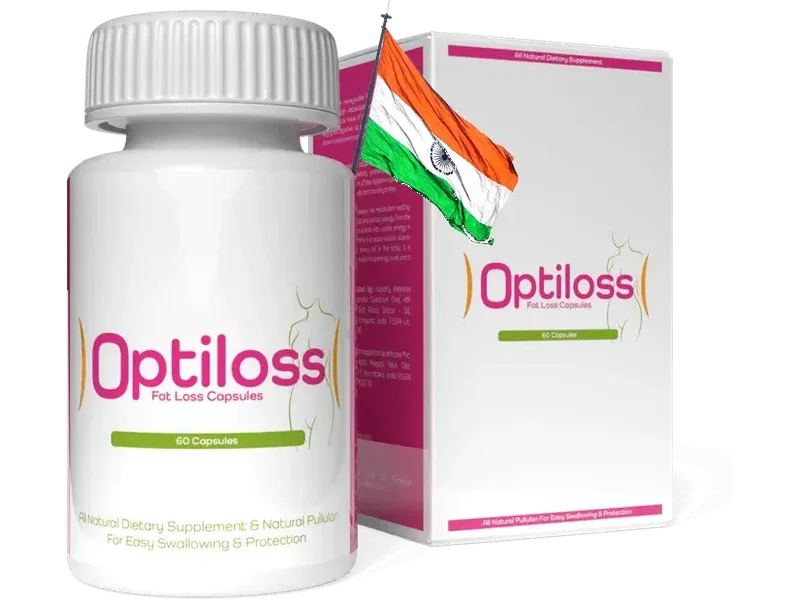
One label carrying all three, plus a stimulant
The seller’s presentation. Our ingredient analysis covers what each declared dose means.
Visit the official page →
Sponsored link
THESE THREE, IN ONE PRODUCT
One label carrying all three, plus a stimulant
The seller’s presentation. Our ingredient analysis covers what each declared dose means.
Visit the official page →
Affiliate disclosure: we earn a commission if you buy through this link, at no extra cost to you. It does not change what we publish.
Frequently asked questions
Does L-carnitine help with weight loss?
Pooled trial data shows a real but small effect, roughly a kilogram over months, mostly in people who are overweight. The mechanism is genuine, but transporting fat for burning does not by itself create the calorie deficit that weight loss requires.
Is garcinia cambogia effective for weight loss?
The evidence is weak and inconsistent. Pooled results show a small short term effect that reviewers describe as not clinically meaningful, and several well designed trials found no difference from placebo. It is the most famous ingredient in the category and among the least supported.
Does green coffee bean extract burn fat?
The supporting trials were small, short and in several cases industry funded, and one prominent study was retracted. Later reviews describe the evidence as weak. It also contributes caffeine, which is worth counting if the same product carries other stimulant sources.
Are these three ingredients safe?
At the doses typically used they are generally well tolerated by healthy adults. The safety question in real products usually comes from what accompanies them, particularly stimulants such as synephrine and the combined caffeine load from green tea and green coffee extracts together.
Why do so many Indian fat burners contain the same ingredients?
Because they are familiar to buyers, cheap to source and legal to sell as food supplements. Familiarity drives sales more reliably than evidence does in this category, which is why the same three names have persisted through a decade of unimpressive trial results.
Keep reading
 Appetite Control Supplements: What Actually Quietens Hunger, and What Just Sells
Appetite suppressants promise to switch hunger off. What actually reduces appetite according to research, what...
Read the analysis →
Appetite Control Supplements: What Actually Quietens Hunger, and What Just Sells
Appetite suppressants promise to switch hunger off. What actually reduces appetite according to research, what...
Read the analysis →
 Banned Weight Loss Ingredients, and Why They Keep Turning Up Anyway
Sibutramine was banned in India in 2010 and is still the most common adulterant found in slimming capsules. Th...
Read the analysis →
Banned Weight Loss Ingredients, and Why They Keep Turning Up Anyway
Sibutramine was banned in India in 2010 and is still the most common adulterant found in slimming capsules. Th...
Read the analysis →
 The Best Weight Loss Supplement in India: Why That Question Is a Trap
Every list of the best weight loss supplements in India is written by a shop. Here is how to read a label, spo...
Read the analysis →
The Best Weight Loss Supplement in India: Why That Question Is a Trap
Every list of the best weight loss supplements in India is written by a shop. Here is how to read a label, spo...
Read the analysis →
 Do Weight Loss Supplements Actually Work? I Read the Research So You Do Not Have To
A systematic review covering more than 300 clinical trials found little to no evidence that weight loss supple...
Read the analysis →
Do Weight Loss Supplements Actually Work? I Read the Research So You Do Not Have To
A systematic review covering more than 300 clinical trials found little to no evidence that weight loss supple...
Read the analysis →
 Fat Burner Side Effects: What Is Normal, What Is a Warning Sign
Most fat burner side effects come from one thing: stimulants. What is normal, what is a warning sign, who shou...
Read the analysis →
Fat Burner Side Effects: What Is Normal, What Is a Warning Sign
Most fat burner side effects come from one thing: stimulants. What is normal, what is a warning sign, who shou...
Read the analysis →
 How to Take Optiloss Capsules: The Dose, and What It Delivers
The seller instructs two Optiloss capsules a day with meals. The printed label declares 400 mg of synephrine i...
Read the analysis →
How to Take Optiloss Capsules: The Dose, and What It Delivers
The seller instructs two Optiloss capsules a day with meals. The printed label declares 400 mg of synephrine i...
Read the analysis →
 How to Read a Supplement Label Before You Believe the Front of the Box
Per serving or per capsule? What a proprietary blend hides? Is an FSSAI licence an approval? A market research...
Read the analysis →
How to Read a Supplement Label Before You Believe the Front of the Box
Per serving or per capsule? What a proprietary blend hides? Is an FSSAI licence an approval? A market research...
Read the analysis →
 Is Synephrine Safe? The Stimulant Behind Most Fat Burners, Examined
Synephrine is the stimulant behind most fat burners. Safety research stops at 98 mg a day, and FDA testing fou...
Read the analysis →
Is Synephrine Safe? The Stimulant Behind Most Fat Burners, Examined
Synephrine is the stimulant behind most fat burners. Safety research stops at 98 mg a day, and FDA testing fou...
Read the analysis →
 Optiloss Real Reviews: Why So Many Sound the Same, and How to Read Past That
Most Optiloss reviews online read almost identically. Here is how to tell a manufactured review from a real on...
Read the analysis →
Optiloss Real Reviews: Why So Many Sound the Same, and How to Read Past That
Most Optiloss reviews online read almost identically. Here is how to tell a manufactured review from a real on...
Read the analysis →
This site is reader supported. If you buy through a link here, I earn an affiliate commission at no extra cost to you. It has not improved any of the three verdicts above.