



Optiloss Capsules Review: What I Found When I Read the Label

By Priya Raghavan · Updated 4 August 2026 · Based on the printed label and published research
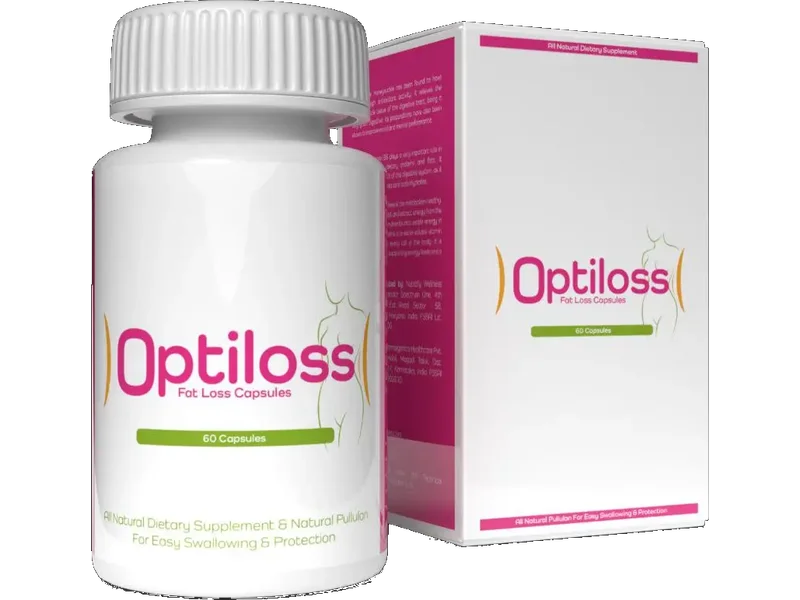
Optiloss is a stimulant based weight loss supplement built around synephrine, L-carnitine, garcinia and green tea extract, sold in India as a bottle of 60 capsules at a dose of two a day. The formula is real and the Indian supply chain is traceable, with a registered company, an address and an FSSAI licence printed on the pack. The problem is one number: the label declares 400 mg of synephrine per daily dose, four times higher than anything tested in published safety research. It may curb appetite for some healthy adults. It is not suitable for anyone with blood pressure, heart or thyroid issues.

Somewhere on Instagram or Facebook you saw an ad, typed "optiloss capsules review" into Google and landed here. I know, because that is roughly how I first heard of it too. My name is Priya. I spent fourteen years as a market research analyst, which is a polite way of saying I spent fourteen years catching the gap between what a product claims and what its own paperwork shows.
This review is built on the product's own documentation: the printed label, the official Indian sales page and the published research on each ingredient. No brand sent me anything and no brand saw this before you did.
What Optiloss is
Optiloss is sold as a natural weight loss capsule. The box describes it as a dietary supplement with plant extracts that "may help with weight loss and body sculpting". Note the "may". Even the manufacturer's own packaging does not promise a result, which is more honesty than most of the ads for it manage.
The brand also sells a slimming cream and a patch. This review covers only the capsules, because that is where nearly all the searches and nearly all the questions are.
The full ingredient list, with the actual milligram amounts from the label, is in my ingredient by ingredient breakdown. The short version:
| Ingredient | Per daily dose | What it is |
|---|---|---|
| L-Carnitine | 500 mg | Amino acid derivative, transports fat for energy use |
| Garcinia Cambogia extract | 500 mg | Fruit extract, marketed for appetite |
| Green tea extract | 500 mg | Antioxidant plus caffeine source |
| Synephrine | 400 mg | Stimulant from bitter orange |
| Green coffee bean extract | 300 mg | Chlorogenic acids plus caffeine |
| Honeysuckle extract | 300 mg | Herbal extract, thin evidence for weight |
| Vitamins B6 and B1 | 1.4 mg and 1.1 mg | Standard daily values |
The elephant in the formula
One line in that table deserves its own paragraph, and I have given it a full article: 400 mg of synephrine per day.
Synephrine is the engine of this product. It is a stimulant, and the published safety research on it stops at 98 mg per day. The French food safety agency recommends staying under 20 mg. Optiloss asks you to take 400 mg, four times beyond the highest studied dose, alongside two caffeine bearing extracts in the same capsules, which is precisely the combination the safety literature warns about.
If you read only one thing before ordering, make it the full side effects article. It lists who should not take this product at all. That list is not short, and if you are on it, nothing else in this review matters.

Who actually makes it, and why I checked
This is the part of the review I could not have written from the marketing, because it comes from reading the back of the pack rather than the front.
With a diet supplement bought from an ad, the question that matters is not "does it have a nice logo". It is "if something goes wrong, is there a company with an address that I can hold responsible". Plenty of products in this category fail that test. Optiloss passes it, and I would rather tell you that than pretend everything about it is bad.
Printed on the Indian pack:
| What the pack states | |
|---|---|
| Marketed by | Nutrafy Wellness Private Limited, Spectrum One, 4th Exit Road, Sector 58, Haryana |
| Manufactured by | Pharmagenica Healthcare Pvt Ltd, Magadi Taluk, Karnataka |
| Licence | FSSAI number printed for both entities |
| Technical supervision | Amashen Ltd |
| Pack | 60 capsules, pullulan shell |
Two things worth saying plainly about that table.
An FSSAI licence is a registration, not an endorsement. It means the business is licensed to make and sell food products in India and can be traced by a regulator. It does not mean anybody assessed whether this formula works, and it does not mean the synephrine amount was reviewed for safety. Any page that tells you Optiloss is "FSSAI approved" is stretching a registration into an approval it never was.
The chain is Indian, with European supervision. The two companies named are Indian, registered, addressable. Amashen appears as technical supervision rather than manufacturer. If you have seen an older listing describing this product as made in a "top USA laboratory", that description does not match what the pack in the Indian market states.
One more thing, about AI summaries. If you ask Google's AI about Optiloss, it may tell you the capsules contain berberine, cinnamon and turmeric. None of those three appears anywhere on the label. Even the "neutral" summary above the search results is describing a formula that does not exist, which is a decent argument for reading the actual pack.
So: traceable supply chain, real ingredient table, no assessment of the thing that actually worries me. I go through what that costs you per month in the price article.
What the ingredients can realistically do
Stripped of advertising, this is a stimulant appetite formula. The garcinia and L-carnitine research shows small effects at best, measured in fractions of a kilogram over months, not the transformations the ads imply. Green tea and green coffee extracts show modest metabolic effects in some studies, largely tied to their caffeine. Honeysuckle has almost no weight research to speak of.
Which leaves synephrine doing the heavy lifting. Stimulants do suppress appetite. That is real, and it is why you will find genuine reviews from people who felt less hungry on these capsules. The honest framing is this: whatever Optiloss does, it does mostly by putting a large, understudied dose of stimulant into your day. Whether that trade is worth it is exactly the question the seller's page will not put to you.
What none of these ingredients does is remove the need to change what you eat. My own 12 kg came off over a year of walking and cooking at home, after every shortcut I tried had failed me, and I would be lying if I said a capsule made the difference.
Who might reasonably consider it, and who should not
Might consider it: a healthy adult under regular medical check ups, no blood pressure, heart, thyroid or anxiety issues, not pregnant or breastfeeding, on no regular medication, low caffeine intake, going in with modest expectations about appetite control and full knowledge of the dose question.
Should not touch it: everyone else. That includes the reader with "slightly high" blood pressure managed by tablets, the new mother, the person with a family history of heart trouble who has never been checked, and anyone who cannot afford to gamble ₹2,999 on a stimulant dose nobody has studied at this level.
My verdict
I do not do star ratings. Numbers imply precision, and precision is exactly what is missing here.
The formula is real, the supply chain is traceable to two registered Indian companies, the appetite effect is plausible for some people, and the packaging at least avoids the wildest promises. Against that: a stimulant dose four times beyond the studied range, caffeine stacked on top of it by design, and an EGCG content nobody discloses.
As an analyst, my conclusion is that the open questions outweigh the known benefits. If you fit the narrow healthy profile above and still want to try it, do it with your eyes open, with the side effects checklist beside you, and read the dosing panel on the bottle the day it arrives.
I am not a doctor and this is not medical advice. I do not diagnose, treat or prescribe. Optiloss contains 400 mg of synephrine per daily dose, above any studied amount. Do not take it if you have high blood pressure, a heart condition or a thyroid disorder, or if you are pregnant or breastfeeding, without speaking to a qualified doctor first.
 Sponsored link
YOU HAVE THE FULL PICTURE NOW
Check today’s price on the official Optiloss page
This is the seller’s page. Prices and bundle deals change without notice, so check today’s figure there rather than trusting mine.
Visit the official page →
Sponsored link
YOU HAVE THE FULL PICTURE NOW
Check today’s price on the official Optiloss page
This is the seller’s page. Prices and bundle deals change without notice, so check today’s figure there rather than trusting mine.
Visit the official page →
Affiliate disclosure: we earn a commission if you buy through this link, at no extra cost to you. It does not change what we publish.
Frequently asked questions
Do Optiloss capsules actually work for weight loss?
The formula can suppress appetite in some people, mainly through its 400 mg of synephrine, a stimulant. The non stimulant ingredients show small effects in research, measured in fractions of a kilogram over months. No published clinical trial of Optiloss itself exists, so any specific weight figure you see in an ad is not backed by a study of this product.
Is Optiloss a scam or a real product?
It is a real product with a real ingredient list, marketed in India by Nutrafy Wellness Private Limited and manufactured by Pharmagenica Healthcare, both with FSSAI licence numbers printed on the pack. Calling it a scam would be inaccurate. The genuine concern is different: a stimulant dose four times above the highest amount published safety research has tested.
How is Optiloss different from other fat burner capsules in India?
The ingredient types are standard for the category: a stimulant, garcinia, green tea and green coffee. What stands out is the synephrine amount, 400 mg per day, which is far above the 10 to 50 mg range typical of studied products. Higher is not better with stimulants. It simply means less is known about what it does.
Where is Optiloss actually made?
The Indian pack states that it is marketed by Nutrafy Wellness Private Limited in Haryana and manufactured by Pharmagenica Healthcare Pvt Ltd in Karnataka, under the technical supervision of Amashen Ltd, with FSSAI licence numbers printed for both Indian entities. If you have seen a listing describing it as made in a "top USA laboratory", that does not match what the pack states.
How many capsules do I take per day?
The seller instructs two capsules a day, taken with meals, from a bottle of 60, which works out to about a month per bottle. Note that those two capsules carry the full 400 mg of synephrine the label declares as its daily dose. When your bottle arrives, read the dosing panel printed on it and follow that if it differs.
Keep reading
 Optiloss on Amazon India: What to Verify Before You Trust Any Listing
Optiloss listings appear on Amazon India and third party shops. What to verify on any box before you trust it,...
Read the analysis →
Optiloss on Amazon India: What to Verify Before You Trust Any Listing
Optiloss listings appear on Amazon India and third party shops. What to verify on any box before you trust it,...
Read the analysis →
 Optiloss Ingredients: Every Line of the Label, Checked Against the Research
The full Optiloss ingredient list with real amounts from the printed label, what research says about each one ...
Read the analysis →
Optiloss Ingredients: Every Line of the Label, Checked Against the Research
The full Optiloss ingredient list with real amounts from the printed label, what research says about each one ...
Read the analysis →
 Optiloss Price in India: What a Bottle Costs, and What It Buys
Optiloss costs ₹2,999 for a bottle of 60 capsules, which is about a month at the instructed dose. Here is the ...
Read the analysis →
Optiloss Price in India: What a Bottle Costs, and What It Buys
Optiloss costs ₹2,999 for a bottle of 60 capsules, which is about a month at the instructed dose. Here is the ...
Read the analysis →
 Optiloss Real Reviews: Why So Many Sound the Same, and How to Read Past That
Most Optiloss reviews online read almost identically. Here is how to tell a manufactured review from a real on...
Read the analysis →
Optiloss Real Reviews: Why So Many Sound the Same, and How to Read Past That
Most Optiloss reviews online read almost identically. Here is how to tell a manufactured review from a real on...
Read the analysis →
 Optiloss Side Effects: What the Label Actually Says
Optiloss lists 400 mg of synephrine per day. The largest safety study stopped at 98 mg. Here is what that gap ...
Read the analysis →
Optiloss Side Effects: What the Label Actually Says
Optiloss lists 400 mg of synephrine per day. The largest safety study stopped at 98 mg. Here is what that gap ...
Read the analysis →
 Optiloss vs Other Fat Burners in India: Compare the Architecture, Not the Adverts
How Optiloss compares with other fat burner types sold in India, judged by formula architecture rather than ma...
Read the analysis →
Optiloss vs Other Fat Burners in India: Compare the Architecture, Not the Adverts
How Optiloss compares with other fat burner types sold in India, judged by formula architecture rather than ma...
Read the analysis →
 The Best Weight Loss Supplement in India: Why That Question Is a Trap
Every list of the best weight loss supplements in India is written by a shop. Here is how to read a label, spo...
Read the analysis →
The Best Weight Loss Supplement in India: Why That Question Is a Trap
Every list of the best weight loss supplements in India is written by a shop. Here is how to read a label, spo...
Read the analysis →
This site is reader supported. If you buy through a link on this page, I earn an affiliate commission at no extra cost to you. No brand reviewed or approved this article.