



The Best Weight Loss Supplement in India: Why That Question Is a Trap

By Priya Raghavan · Updated 4 August 2026 · Based on the printed label and published research
There is no best weight loss supplement in India, because the evidence for the whole category is weak and nearly every ranking you will find is published by a shop selling the products it ranks. What exists instead is a short checklist that separates honestly labelled products from misleading ones: declared doses per ingredient, no proprietary blends, stimulant content you can actually see, and no promise that mentions a number of kilograms. This guide teaches you that checklist.

Search for the best weight loss supplement in India and count how many results are stores. Nutrition marketplaces, brand websites, sellers with a blog attached. Every list ends in an add to cart button, which tells you what the list is for.
I am not a store. I spent fourteen years checking whether marketing claims survived contact with their own data, and this page is the guide I wish someone had handed me the first time I typed that exact search, back when I was carrying my post pregnancy weight and a lot of hope.
Start with the question nobody asks
Before comparing products, ask whether a capsule belongs in your plan at all. I summarised the research in my article on whether these supplements work, and the short version is uncomfortable: a review of more than 300 trials found little to no high quality evidence for the category, and the few real effects were too small to notice in daily life.
So the honest frame for this guide is not "which one burns fat fastest", because none of them does anything of the kind. It is "if I have decided to try one anyway, how do I avoid the worst of the shelf". That is a question with real answers.
How to read a label like an analyst
The label is the only document the seller is legally accountable for. The advertisement is aspiration; the label is testimony. Here is what to check, in order.
| Check | Green flag | Red flag |
|---|---|---|
| Doses | Each ingredient with its own mg amount | A "proprietary blend" with one total number |
| Stimulants | Caffeine or synephrine content stated plainly | Stimulants hidden inside botanical names |
| Serving maths | Capsules per box covers a full month at the stated dose | A box that quietly lasts a week |
| Claims | "Supports", "may help", paired with diet and exercise | Any number of kilograms, any timeframe |
| Identity | Manufacturer name and address you can find | A brand with no traceable company behind it |
| Registration | FSSAI licence number printed on the pack | No number, or "international" excuses |
Two of these deserve a longer look.
Proprietary blends are the oldest trick on the shelf. A label that says "thermogenic complex 900 mg" without individual doses is telling you the recipe is secret. There is only one commercial reason to keep a recipe secret from the person swallowing it: the individual doses would not impress you. Treat every proprietary blend as an admission. It is one of six checks in my guide to reading a supplement label.
Hidden stimulants are the safety issue. Green tea extract, green coffee extract, bitter orange, guarana and yerba mate all carry stimulants under botanical names. A formula can be marketed as plant based and gentle while stacking three stimulant sources in one serving. If you drink chai or coffee through the day, as most of us do, you are adding your own on top. Anyone with blood pressure or heart concerns needs the stimulant arithmetic visible, and most labels make it invisible.
What "natural" does and does not mean
Natural is the most profitable word in this industry and the least regulated. Arsenic is natural. So is ephedra, which was natural right up until regulators pulled it off markets worldwide after the cardiac case reports piled up.
On an Indian shelf, natural typically means plant derived. It tells you nothing about dose, interactions or safety. The relevant questions are always the same: which compound, how many milligrams, studied at what level, and who should avoid it. A label that answers those four questions has earned some trust, whatever adjectives it uses. A label that answers none of them has not, however many leaves are printed on the box.
Bigger doses are not better doses
Here is a pattern I keep seeing since I started reading these labels: brands compete on numbers. If one product has 200 mg of an ingredient, the next advertises 400, as if milligrams were horsepower.
With stimulants this logic inverts. Research establishes safety within a studied range, and beyond that range nobody knows anything, which is not a feature. The clearest example I have documented is Optiloss, whose label declares 400 mg of synephrine per day against a published safety ceiling of 98 mg. I wrote a full analysis of what that gap means, and the lesson generalises to any product: when a dose is far above what studies have tested, the correct reading is less evidence, not more strength.
The categories, ranked by honesty of evidence
Since I will not rank products, here is the more useful ranking: ingredient categories by how their evidence holds up. The details are in my breakdown of the big three ingredients.
Fibre based fillers (glucomannan and relatives). The most defensible corner of the shelf. Real but small effects, sensible mechanism, low risk for most people. Also the least glamorous, which tells you something about what marketing budgets follow.
Plain protein. Not sold as a fat burner, works better than most of them, because protein blunts hunger measurably. A protein rich breakfast outperforms most capsules in the appetite literature.
Stimulant formulas. Real short term appetite effects, real cardiovascular questions, and the entire fat burner category lives here whatever the front of the pack says.
Fame based botanicals (garcinia and friends). Enormous reputation, evidence that shrinks every time a better designed study is run.
If you still want to buy one
Then do it like an analyst, not like a hopeful person at midnight. Read the label against the table above. Reject anything with a proprietary blend or a kilogram promise. Count the stimulant sources, including your own tea, and know what those stimulants can do to you before you swallow the first one. Check the FSSAI number exists. Run the serving maths so you know the real cost per month before the checkout page tells you a discounted lie. And clear it with a doctor if you take any regular medication at all.
One product on this site has been through that full process, label against literature: my Optiloss review shows exactly what the method looks like when applied, including the parts the seller would prefer I had skipped. Use it as a worked example, whether for that product or as a template for interrogating any other.
I am not a doctor and nothing here is medical advice. I do not diagnose, treat or prescribe. No supplement on the Indian market is a treatment for obesity or any medical condition, and stimulant formulas are unsuitable for people with blood pressure, heart or thyroid conditions and for anyone pregnant or breastfeeding without a doctor's clearance. If a product ever causes palpitations, chest discomfort or a racing heart at rest, stop it and see a doctor.
 Sponsored link
A WORKED EXAMPLE
Run the checklist above against a real product
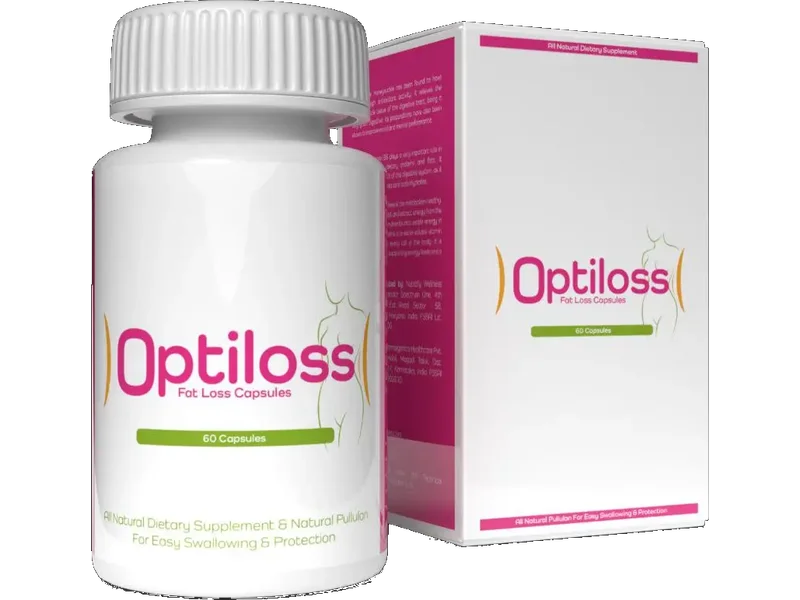
The seller’s presentation for Optiloss, the product analysed across this site. Use our review alongside it.
Visit the official page →
Sponsored link
A WORKED EXAMPLE
Run the checklist above against a real product
The seller’s presentation for Optiloss, the product analysed across this site. Use our review alongside it.
Visit the official page →
Affiliate disclosure: we earn a commission if you buy through this link, at no extra cost to you. It does not change what we publish.
Frequently asked questions
Which weight loss supplement is best in India?
None holds that title on evidence. The category's research base is weak, and rankings you find online are almost always published by sellers. The better question is which products are honestly labelled: individual doses declared, no proprietary blends, stimulant content visible and no kilogram promises. Most products fail that screen before any comparison begins.
What should I check before buying a fat burner in India?
Five things: each ingredient's dose in mg, the total stimulant load including botanical sources, whether the box lasts a month at the stated dose, the FSSAI licence number on the pack, and the absence of numeric weight loss promises. A product that fails two or more of these is telling you how it does business.
Is a proprietary blend bad?
It is a disclosure choice, and a revealing one. A blend hides individual doses behind one total number, which prevents you from checking any ingredient against research. Since impressive doses are a selling point, hiding them usually means they are not impressive.
Are Ayurvedic weight loss products safer than imported fat burners?
Not automatically in either direction. The relevant questions are identical: declared doses, stimulant content, manufacturer identity and regulatory registration. Traditional branding answers none of them by itself, and some herbal products carry stimulants under unfamiliar names.
Do doctors recommend weight loss supplements?
Medical bodies that have reviewed the evidence urge clinicians towards diet, activity and sleep as the interventions with real support, and away from over the counter supplements, whose review evidence is weak. If your doctor does suggest a specific product, that individual advice, made with your history in view, outranks anything a website can tell you, including this one.
Keep reading
 Appetite Control Supplements: What Actually Quietens Hunger, and What Just Sells
Appetite suppressants promise to switch hunger off. What actually reduces appetite according to research, what...
Read the analysis →
Appetite Control Supplements: What Actually Quietens Hunger, and What Just Sells
Appetite suppressants promise to switch hunger off. What actually reduces appetite according to research, what...
Read the analysis →
 Banned Weight Loss Ingredients, and Why They Keep Turning Up Anyway
Sibutramine was banned in India in 2010 and is still the most common adulterant found in slimming capsules. Th...
Read the analysis →
Banned Weight Loss Ingredients, and Why They Keep Turning Up Anyway
Sibutramine was banned in India in 2010 and is still the most common adulterant found in slimming capsules. Th...
Read the analysis →
 Do Weight Loss Supplements Actually Work? I Read the Research So You Do Not Have To
A systematic review covering more than 300 clinical trials found little to no evidence that weight loss supple...
Read the analysis →
Do Weight Loss Supplements Actually Work? I Read the Research So You Do Not Have To
A systematic review covering more than 300 clinical trials found little to no evidence that weight loss supple...
Read the analysis →
 Fat Burner Side Effects: What Is Normal, What Is a Warning Sign
Most fat burner side effects come from one thing: stimulants. What is normal, what is a warning sign, who shou...
Read the analysis →
Fat Burner Side Effects: What Is Normal, What Is a Warning Sign
Most fat burner side effects come from one thing: stimulants. What is normal, what is a warning sign, who shou...
Read the analysis →
 How to Take Optiloss Capsules: The Dose, and What It Delivers
The seller instructs two Optiloss capsules a day with meals. The printed label declares 400 mg of synephrine i...
Read the analysis →
How to Take Optiloss Capsules: The Dose, and What It Delivers
The seller instructs two Optiloss capsules a day with meals. The printed label declares 400 mg of synephrine i...
Read the analysis →
 L-Carnitine, Garcinia and Green Coffee: What the Research Says About the Big Three
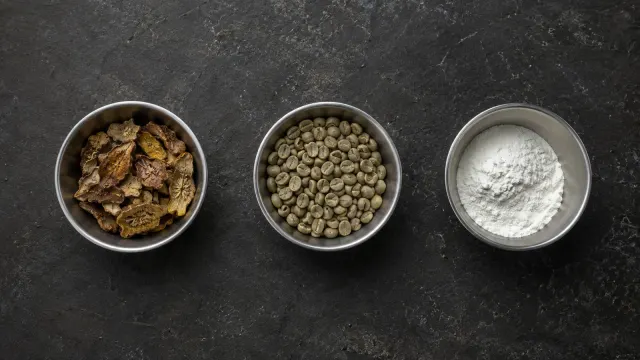
The three ingredients in almost every Indian fat burner, checked against published research. What each one doe...
Read the analysis →
L-Carnitine, Garcinia and Green Coffee: What the Research Says About the Big Three
The three ingredients in almost every Indian fat burner, checked against published research. What each one doe...
Read the analysis →
 How to Read a Supplement Label Before You Believe the Front of the Box
Per serving or per capsule? What a proprietary blend hides? Is an FSSAI licence an approval? A market research...
Read the analysis →
How to Read a Supplement Label Before You Believe the Front of the Box
Per serving or per capsule? What a proprietary blend hides? Is an FSSAI licence an approval? A market research...
Read the analysis →
 Is Synephrine Safe? The Stimulant Behind Most Fat Burners, Examined
Synephrine is the stimulant behind most fat burners. Safety research stops at 98 mg a day, and FDA testing fou...
Read the analysis →
Is Synephrine Safe? The Stimulant Behind Most Fat Burners, Examined
Synephrine is the stimulant behind most fat burners. Safety research stops at 98 mg a day, and FDA testing fou...
Read the analysis →
 Optiloss Real Reviews: Why So Many Sound the Same, and How to Read Past That
Most Optiloss reviews online read almost identically. Here is how to tell a manufactured review from a real on...
Read the analysis →
Optiloss Real Reviews: Why So Many Sound the Same, and How to Read Past That
Most Optiloss reviews online read almost identically. Here is how to tell a manufactured review from a real on...
Read the analysis →
This site is reader supported. If you buy through a link here, I earn an affiliate commission at no extra cost to you. No brand pays for placement in my articles, and no brand saw this guide before you did.